

Steering Wheel Material Explained: Impact on Authenticity
Finding a steering wheel that truly reflects your classic car’s origins can feel like a daunting task. Genuine wood and leather components are more than eye-catching details—they serve as essential links to your vehicle’s historical integrity and driving performance. For collectors in North America, the right material can mean the difference between a car that feels authentic and one that falls short of its heritage. This guide highlights what sets classic steering wheel materials apart and why these choices matter for restoration and value.
Table of Contents
- What Steering Wheel Material Means For Classic Cars
- Types Of Steering Wheel Materials Explained
- Comparing Wood Vs. Leather Steering Wheels
- Authenticity, Handling, And Value Implications
- Maintenance Needs And Common Pitfalls
Key Takeaways
| Point | Details |
|---|---|
| Steering Wheel Material Matters | The choice of steering wheel material significantly affects the authenticity and performance of classic cars. Selecting appropriate materials is essential for preservation. |
| Authenticity Is Key | Maintaining originality in materials is crucial for preserving the vehicle’s historical integrity and increasing its market value. |
| Care and Maintenance Varies | Different materials require specific care techniques to prevent deterioration and enhance longevity. Proper maintenance is essential for preserving aesthetic and functional qualities. |
| Consult Experts | Always refer to original manufacturer specifications and seek guidance from restoration experts for authentic results in restoration projects. |
What Steering Wheel Material Means for Classic Cars
Classic car enthusiasts understand that steering wheel material isn’t just about aesthetics—it’s about preserving vehicular historical integrity. Classic car owners’ relationship with authenticity goes far beyond surface-level appearances, deeply connecting emotional investment with mechanical precision.
The choice of steering wheel material fundamentally impacts a classic car’s overall authenticity and performance. Different materials offer unique characteristics that resonate with specific automotive eras and restoration goals:
-
Wood Steering Wheels
- Represent luxury and traditional craftsmanship
- Commonly found in European and American luxury vehicles from 1950-1980
- Provide warm, elegant tactile experience
-
Leather Steering Wheels
- Signify premium sportiness and performance
- Offer superior grip and comfort
- Popular in racing and high-end classic models
-
Synthetic Materials
- Modern replacement options
- Often lack the authentic feel of original materials
- Can compromise the vehicle’s historical character
Materials aren’t just decorative elements—they’re historical artifacts that tell a vehicle’s story. Each steering wheel material carries its own mechanical and aesthetic signature, representing the engineering philosophy of its specific automotive era.
Classic car authenticity isn’t about perfect preservation, but about maintaining the genuine spirit of automotive design.
When selecting a steering wheel, serious collectors consider more than just appearance. Factors like period-correct manufacturing techniques, original material composition, and historical accuracy become critical decision-making criteria.
Pro tip: Always consult original manufacturer specifications and restoration experts before replacing your classic car’s steering wheel to ensure maximum authenticity.
Types of Steering Wheel Materials Explained
Classic car restoration demands a nuanced understanding of steering wheel materials, each with its unique historical and functional significance. Steering wheel materials have evolved dramatically over automotive history, reflecting technological advances and design philosophies.
Traditional steering wheel materials offer distinct characteristics that impact both performance and aesthetic authenticity:
-
Wood Steering Wheels
- Handcrafted from exotic hardwoods like walnut and mahogany
- Prevalent in luxury European cars from 1950-1980
- Symbolize elegance and traditional craftsmanship
- Provide warm, tactile driving experience
-
Leather Steering Wheels
- Preferred in high-performance and racing vehicles
- Offer superior grip and comfort
- Typically used in sports cars and premium models
- Demonstrate driver-focused design philosophy
-
Metal Steering Wheels
- Lightweight and extremely durable
- Common in early automotive designs
- Excellent heat and wear resistance
- Often found in vintage industrial and military vehicles
-
Synthetic Materials
- Modern replacement options
- More affordable and standardized
- Lack the authentic feel of original materials
- Can compromise historical vehicle character
The material of a steering wheel isn’t just a design choice—it’s a direct connection to automotive heritage.
Understanding the historical context of steering wheel materials helps collectors and enthusiasts make informed restoration decisions. Each material represents a specific era of automotive engineering, reflecting technological capabilities and design philosophies of its time.
The selection process involves careful consideration of period-correct manufacturing techniques, original material composition, and the vehicle’s specific historical background. Serious collectors prioritize authenticity over mere aesthetic appeal.
Here’s a comparative summary of steering wheel materials and their ideal use in classic vehicles:
| Material Type | Best Suited Vehicle Types | Key Restoration Focus | Challenges |
|---|---|---|---|
| Wood | 1950s-1980s luxury and touring | Craftsmanship & originality | Prone to heat, delicate |
| Leather | Vintage sports and performance cars | Grip and driver comfort | Requires regular care |
| Metal | Early, industrial, or military autos | Durability & vintage look | Can feel cold, utilitarian |
| Synthetic | Modernized classics, replicas | Cost and standardization | Less authentic appearance |
Pro tip: Always cross-reference original manufacturer specifications and consult restoration experts to ensure your steering wheel material matches the vehicle’s original design and era.
Comparing Wood vs. Leather Steering Wheels
Classic car restoration demands a critical understanding of steering wheel materials, with wood and leather representing two distinctive approaches to automotive design and authenticity. Steering wheel material selection involves carefully weighing aesthetic, functional, and historical considerations.
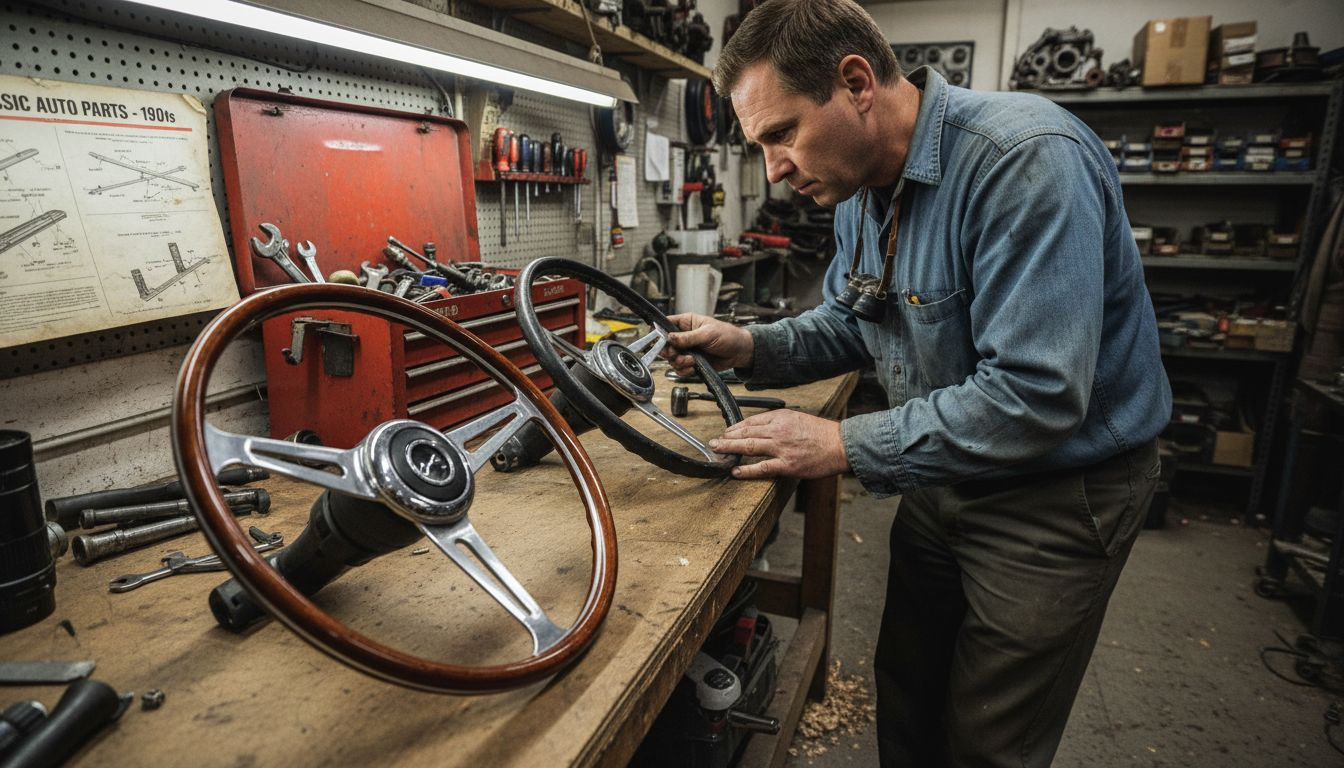
Wood and leather steering wheels each bring unique characteristics to classic car restoration:
Wood Steering Wheels
- Represent traditional luxury and craftsmanship
- Provide exceptional visual authenticity
- Typically handcrafted from exotic hardwoods
- Require meticulous maintenance
- Heavier and more delicate
Leather Steering Wheels
- Offer superior grip and comfort
- Lighter and more durable
- Easier to maintain and replace
- Popular in performance-oriented vehicles
- More resistant to environmental wear
Comparing these materials reveals nuanced trade-offs for classic car enthusiasts. Wood steering wheels embody historical elegance, connecting drivers to automotive heritage through their intricate craftsmanship. They symbolize an era of handmade precision but demand specialized care to prevent cracking and deterioration.
Authenticity in classic car restoration isn’t just about appearance—it’s about preserving the soul of automotive design.
Leather steering wheels, by contrast, provide practical advantages. Their superior grip, lightweight construction, and durability make them attractive for collectors seeking both aesthetic appeal and functional performance. Modern restoration techniques can even create leather wheels that maintain period-correct aesthetics while offering enhanced usability.
Ultimately, the choice between wood and leather depends on the specific vehicle’s provenance, the owner’s restoration philosophy, and the delicate balance between historical accuracy and modern driving comfort.
Pro tip: Consult vintage manufacturer documentation and restoration specialists to determine the most historically accurate steering wheel material for your specific classic car model.
Authenticity, Handling, and Value Implications
Classic car restoration involves complex decisions about steering wheel materials that extend far beyond mere aesthetic considerations. Classic car authenticity challenges reveal a nuanced interplay between historical preservation and practical performance.
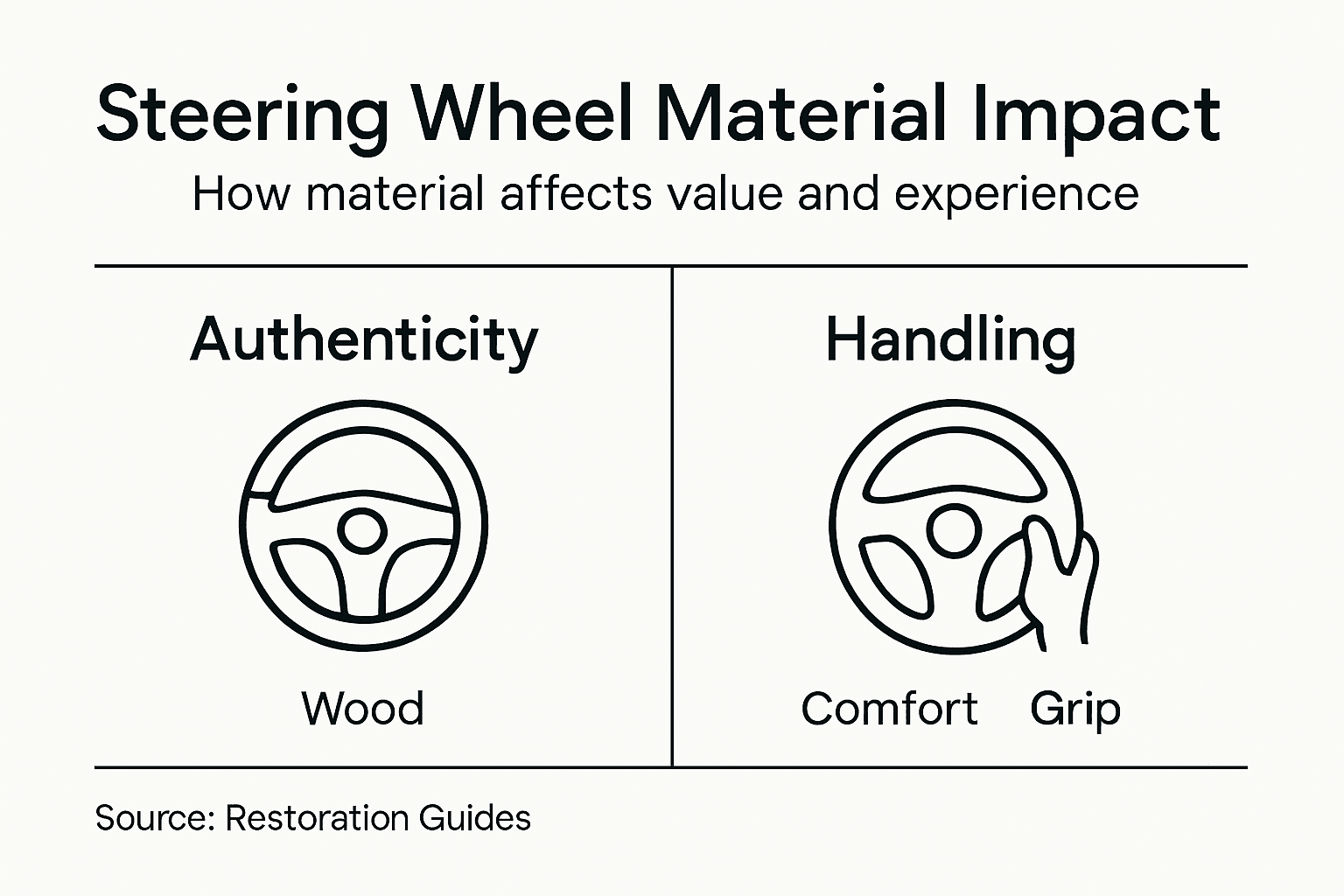
The implications of steering wheel material selection impact multiple critical aspects of classic car ownership:
Authenticity Factors
- Preserves original manufacturing standards
- Demonstrates commitment to historical accuracy
- Validates vehicle’s historical documentation
- Influences collector and market perceptions
- Determines potential future valuation
Handling Considerations
- Material weight affects steering responsiveness
- Grip characteristics impact driver control
- Surface texture influences driving experience
- Material durability determines long-term performance
- Thermal and tactile properties matter
Authenticity isn’t just about appearance—it’s about maintaining the vehicle’s intrinsic mechanical spirit.
The relationship between steering wheel material and vehicle value represents a delicate balance. Original materials can significantly enhance a classic car’s market worth, with collectors placing premium value on period-correct components that demonstrate meticulous restoration.
Practical considerations frequently challenge the pursuit of absolute authenticity. Modern performance requirements, safety regulations, and driving comfort sometimes necessitate strategic compromises that balance historical accuracy with contemporary functionality.
Ultimately, successful restoration demands a holistic approach that respects the vehicle’s heritage while acknowledging the practical realities of contemporary use.
See how different steering wheel materials impact classic car market value and usability:
| Material | Impact on Value | Effect on Driving Comfort |
|---|---|---|
| Original Wood | High, preserves history | Moderate, needs upkeep |
| Original Leather | High, especially in sports models | High, preferred for grip |
| Aftermarket Synthetic | May reduce value | High, but less authentic |
| Restored Metal | Moderate if era-correct | Low to moderate |
Pro tip: Document every material modification during restoration to maintain your classic car’s provenance and future collectible value.
Maintenance Needs and Common Pitfalls
Classic car steering wheel preservation demands sophisticated maintenance strategies tailored to specific materials. Wood steering wheel restoration techniques require meticulous attention to prevent rapid deterioration and maintain historical authenticity.
Maintenance challenges vary significantly between different steering wheel materials:
Wood Steering Wheel Maintenance
- Regular inspection for microscopic cracks
- Avoid direct sunlight exposure
- Use specialized wood conditioning treatments
- Protect from extreme temperature fluctuations
- Apply protective sealants periodically
Leather Steering Wheel Maintenance
- Condition leather every 3-6 months
- Clean with specialized leather cleaners
- Avoid harsh chemical treatments
- Prevent direct sunlight damage
- Monitor for signs of cracking or separation
Preservation is a continuous dialogue between historical integrity and practical care.
Common restoration pitfalls often emerge from well-intentioned but misguided preservation attempts. Enthusiasts might inadvertently damage original materials by using inappropriate cleaning techniques, incompatible restoration products, or failing to understand the specific material’s unique characteristics.
Authentic restoration requires deep understanding of original manufacturing techniques and material science. Each material demands a nuanced approach that balances conservation principles with practical usability.
Modern restoration technologies offer advanced solutions for maintaining classic steering wheel materials, but they cannot replace the fundamental knowledge of material-specific care techniques.
Pro tip: Invest in professional consultation before attempting complex steering wheel restoration to prevent irreversible damage to your classic car’s original components.
Elevate Your Classic Car’s Authenticity with the Perfect Steering Wheel
Choosing the right steering wheel material is one of the most important steps in preserving your classic car’s authenticity and driving experience. Whether you value the traditional elegance of handcrafted wood or the superior grip and comfort of leather, selecting an authentic material that matches your vehicle’s era is critical. At Punk Wheels, we understand how crucial this decision is to your restoration goals and emotional connection with your car’s heritage.

Explore our collection of Premium Real Wood Steering Wheels | Quick Release – Punk Wheels for an elegant vintage centerpiece or switch to a Microfiber Leather Steering Wheels | Punk Wheels option if you desire enhanced driver comfort while maintaining period-correct style. Every product is designed to help you preserve the genuine spirit of your classic automobile. Visit Punk Wheels today and choose the steering wheel material that keeps your car true to its authentic history while delivering the best in functionality and style.
Frequently Asked Questions
What are the different types of steering wheel materials in classic cars?
The most common types of steering wheel materials found in classic cars are wood, leather, metal, and synthetic materials. Each contributes uniquely to the car’s authenticity and performance.
How does steering wheel material impact the authenticity of a classic car?
Steering wheel material is crucial for maintaining historical authenticity. Using original materials aligns with manufacturing standards, upholds the vehicle’s provenance, and influences its market value.
What are the maintenance needs for wood steering wheels in classic cars?
Wood steering wheels require regular inspections for cracks, protection from sunlight, and the application of specialized conditioning treatments to prevent deterioration and maintain their authenticity.
How do wood and leather steering wheels compare in terms of driving experience?
Wood steering wheels offer a traditional, warm feel that emphasizes luxury, while leather steering wheels provide superior grip and comfort, making them more suitable for performance-oriented vehicles.